

Creating Impact and Charm with Embroidery Patch Letters
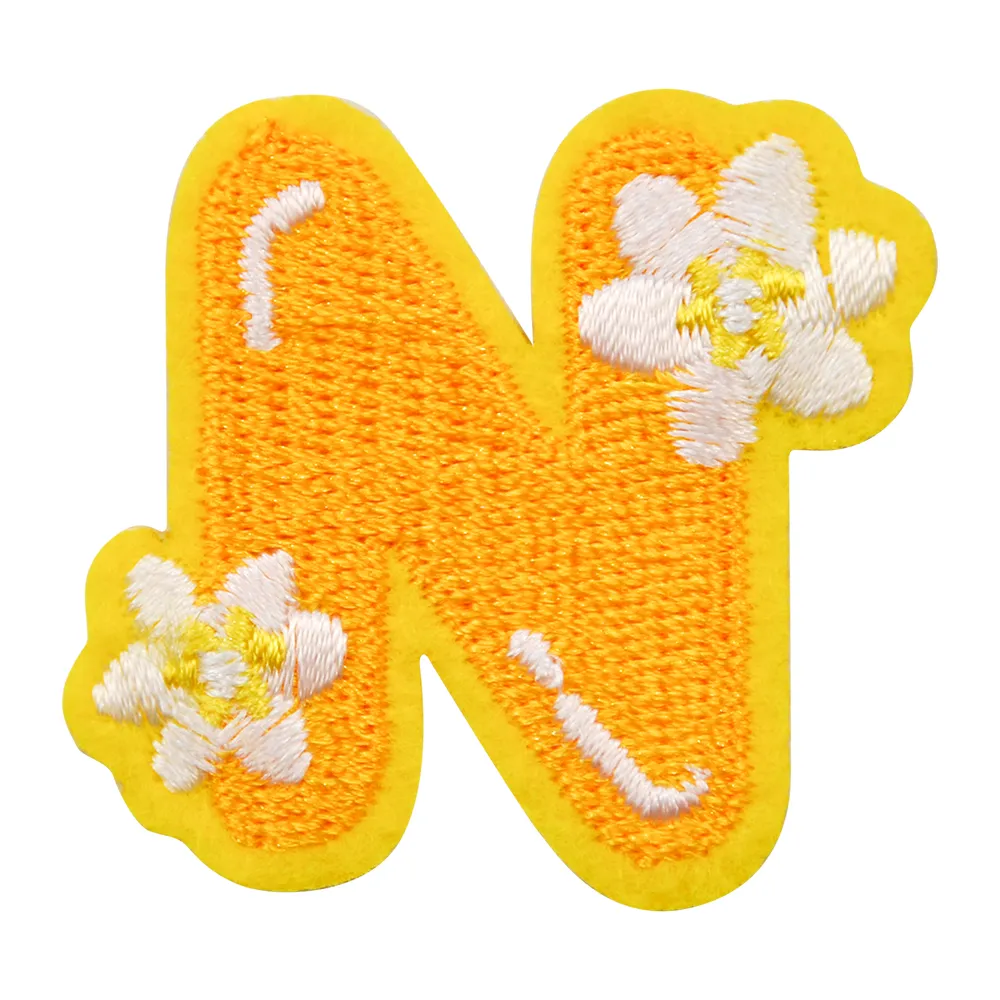
Creating a personalized item is so much fun. There is no better way to express your personality and make a statement than by using embroidery patch letters to decorate items like jackets, leather jackets, hoodies, denim jackets, denim vests, school bags, canvas bags and so much more. There are so many things that you can use embroidery patch letters to make into personalized items. We can also use them to make customized gifts for friends and family. We have a vast array of fonts and colors to make your embroidery patch letters and we can match any color that you need. We can make any variety of personalized items using embroidery patch letters.
Embroidery patch letters are a fantastic way to express yourself and tell people about your history, achievements and affiliations. Each letter can carry a story, and together with history, art and your personal narrative, it can bring a lot of value to the clothes that you wear. We will take a look at the ways in which you can incorporate embroidery patch letters to your wardrobe in a creative way, and give old clothes a new lease of life or make new clothes from scratch. I will be showing you how to weave some magic into your wardrobe using these amazing little pieces of embroidery patch letters.
History and Evolution of Embroidery Patch Letters
There are many different historical designs for embroidery patch letters and each country has its own variety of different motifs, as well as different methods of stitching. In Europe in the medieval period, there were banners and tunics bearing embroidered letters and crests of noblemen, which were used to identify their owners. As trade routes expanded, the art of embroidery was passed to Asia and the Middle East and as time passed, each country and culture developed its own style and way of working with the art. Today, in the 20th century, Varsity letters were made from chenille fiber, and were then appliquéd to the sleeves of Varsity jackets. In the fifties, this art form was transferred to the realm of fashion when motorcycling clubs, and other groups started to wear leather jackets with embroidered letters on them. Today, most embroidery designs are made up on computers and then transferred to any surface using an embroidery machine.
Chenille letters, made from chenille yarn, with embroidered numbers or letters were introduced in the United States in the mid-20th century. These patch letters were attached to clothing and other items of individuals belonging to college sports teams, to the clothing of motorcyclists clubs and other groups. The chenille letters were stitched on the jacket using a needle and thread. Most of the patches were attached to the front of the jacket, on the chest. On a leather jacket the patches were usually attached on the left side of the jacket. In the 1940s chenille letters started to appear on the leather jackets of members of motorcycle clubs. In the 1950s and 1960s similar patches started to appear on the clothing of fans of college sports teams. Later, with the introduction of the computerized machines for embroidery, it became possible to mass-produce such patches. Today patches with embroidered letters can be found in shops and online. There are many designs of such patches, ranging from traditional crests of armories and family coats of arms to modern logos of companies. The patches are made by professional designers as well as by amateurs. The technology of the computerized machines for embroidery has made it possible to produce patches with very complex designs.
History and Evolution of Embroidery Patch Letters
The art of embroidery patch letters dates back centuries. In the medieval Europe embroidered letters were used on banners and on clothing such as tunics. They Fabric selection is crucial to your letter patches. There are so many different fabrics that can be used for embroidery patch letters. However, some are better than others. For example, twill is a very popular fabric for embroidery. It has a smooth surface which allows for crisp edged embroidery. It is also very durable and long lasting which is perfect for making patches to attach to clothing. Felt is another very popular fabric that is often used for making embroidery patch letters. Felt is thick and has lots of texture which means that any embroidery that is done on felt will stand out in a very dimensional way. It can also be used to create very unique and interesting embroidery. Denim and canvas are also great for making letter patches, especially if you want them to look worn and rugged. These two fabrics are very commonly used to make clothing that is worn a lot, so they already have lots of character and texture. Adding embroidery to denim or canvas patches can give them a very personal touch and make them look hand made. There are many different ways to attach embroidered patches to clothing and other items, but some methods are better than others. For example, if you are going to be washing the item a lot, then sewing the patches on is the best way to attach them. This will stop the patches from coming off in the wash. If you want to attach the patches without sewing, then using an iron on backing is a good option. This type of backing has a heat activated adhesive that attaches the patch to the fabric when it is ironed. There are also transparent adhesive films that can be used to attach patches. These films are great because they are transparent, so they do not show. They can also be used to attach patches without leaving any edges visible.
In selecting threads for your designs, it is generally recommended to use polyester threads because of their colorfastness, meaning that they are less likely to fade when exposed to UV light. Rayon threads are very lustrous and are often used to add a touch of elegance to designs. Cotton threads are very common and are used in many casual designs and produce a flat, matte finish. Heavy weight threads produce very bold outlines and details, while fine weight threads produce very fine lines and details. The fabric used in combination with the correct weight of thread is very important in ensuring that your patches are durable enough to be washed and worn repeatedly.
Incorporating Patch Letters into Clothing
There are two principal ways in which patches can be attached to clothing, both of which can be used to weave history, art and personal narrative into existing garments and to create entirely new items. Firstly the patches can be attached by sewing them onto items of clothing of all kinds, including jackets, denim and button-down shirts and denim vests. Because of the huge variety of letters, patches, designs and colors available there are infinite numbers of different possible messages that can be sewn onto items of clothing. Letters can be positioned to highlight individual letters and to create large, striking statements on the back of garments, for example. Denim garments, including jackets and vests are particularly well suited to being decorated with embroidery patch letters. There are many different approaches that can be used when choosing where to place individual letters.
Attachments to your design can be sewn on or ironed on. Chenille letters are attached to garments by sewing on. These can last the life of the garment. However, iron-on attachments are perfect for last minute customizing. The iron-on back of the patches are coated with a heat-activated adhesive. This is then adhered to the material when heated with an iron. Clear transparent adhesive films can also be used to cover the seam allowance of the patch letters to give a clean finish to the attachment. It is always a good idea to test any type of attachment on a scrap piece of fabric first to check that the fabric can hold the attachment securely and that the attachment has been applied correctly.
Using Patch Letters to Personalize Accessories
Embroidery patch letters can be used to add personal touches to many different kinds of items of clothing and other accessories. Canvas tote bags, school and college backpacks, casual tops and shirts, baseball caps, denim jackets, school blazers and laptop bags are just a few examples of things that can be customized with embroidery patch letters. The items that can be customized in this way make very good gifts and allow the wearer to express their personality. Monograms or a series of letters can be embroidered onto an item of clothing or accessory in order to add a personal touch, or a single word or symbol that expresses the interests of the owner of the item. There are so many options available, and so many ways in which customized items of clothing and other accessories can be used.
As for the distribution of letters on your items, normally letters like names and initials are distributed in a small space and grouped together. Larger letters of bold designs are also spread apart and in a bigger space to form words and phrases that reflect the wearer’s interest, hobbies, etc. By mixing and matching different types of fonts, colors and designs, you will also add more interest to your embroidery patch letters. Items such as tote bags made of canvas or water-resistant materials may require special adhesives or even different methods of sewing. Also, items made of very thin or delicate materials would require special care such as waterproof backing sprays or even a tailor’s awl to guide the needle without piercing or even ripping the material. Placing your embroidery patch letters on the straps of your bag or on the corners of your hat or even your laptop case will give your personal statement a mobile twist.
Maintaining and Caring for Embroidery Patch Letters
To wash items with embroidery patches on them, wash them inside out. Wash in cold water with a gentle wash cycle. It is recommended to hand wash items with embroidery patches using a mild detergent and lukewarm water. Lay items with embroidery patches on them out flat to dry on a clean towel. Do not wring or twist items with embroidery patches on them as this can cause the patch to become distorted. If you must use a dryer to dry items with embroidery patches on them, wash on lowest heat setting and remove as soon as cycle is complete. If an embroidery patch becomes frayed, apply a small amount of clear fabric glue to the area or re-stitch the area to secure.
When drying items with patches try to lay them flat on a towel with the patch facing upwards. Try not to wring or twist items with patches as they can become distorted. Items with patches can be dry cleaned. When taking to a dry cleaners make sure to place the item in a dry cleaning bag and use the lowest heat setting. Remove item as soon as cycle is complete. Check patches from time to time for any loose threads. If patch starts to fray make sure to secure the edges with a small amount of clear fabric glue or by sewing.
Conclusion: Making a Statement with Embroidery Patch Letters
Embroidery patch letters are a fantastic way to make a statement or show off your creativity, by combining history with current fashion. Whether you decide to get creative and hand-make your own patch to attach to a piece of clothing or accessories, or choose to get custom made to say something, you can be sure that everyone will see your new piece of wearable art.
You can now use all of this information to make all sorts of one of a kind clothing, accessories and more. Each piece will be unique and show your personal touch. The art of making your own embroidery patch letters can be enjoyed by people of all ages. Whether you are young or old I hope that you can find ways to make and use embroidery patch letters in many different ways.
